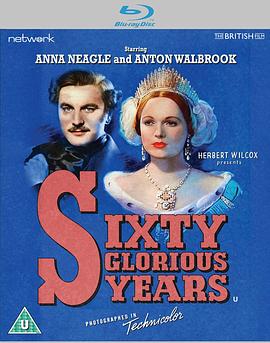
Sixty Glorious Years is an exercise in the creation of iconography, both for Victoria and its star, Anna Neagle (who subsequently became known as 'Regal Neagle'). Just as Elizabeth I commissioned artists to create flattering iconic images for public consumption, so this film performs a similar function, for Neagle is more beautiful than the real life Victoria. Controversial events (such as the 'Irish problem') are omitted and unpleasant aspects of Victoria's character (her petulance, arrogance, favouritism and 'right to privilege') are glossed over as endearing little 'whims'. Albert acts as a moderating influence when she goes too far. The film followed a year after the highly successful Victoria the Great (d. Herbert Wilcox, 1937). Again the screenplay is by Miles Malleson and Robert Vansittart, and many of the supporting cast (the cream of acting talent of period) repeat their roles, this time for the colour cameras. This was the first full length Technicolor film of cinematographer Freddie Young, who captures the spectacle of royal weddings, grand balls and opulent interiors, with scenes actually filmed at royal palaces. Vivid battle scenes, set in Alexander Korda's empire territory (Sevastopol and the Sudan), rival those in The Four Feathers (d. Zoltan Korda 1939). The title music sets the tone a regal choir sings over a shot of the crown. Elgar's 1901 'Pomp and Circumstance' march is heard during the diamond jubilee celebrations and, as Victoria's coffin lies in state, the film concludes with Anthony Collins' stately music accompanied by the text of Rudyard Kipling's 'Lest we forget'. Combined with the emotional appeal of scenes of Victoria connecting with her 'ordinary folk', this is stirring stuff. The film connects with contemporary events of 1938. The release of two celebratory royal films was intended to boost public affection for the monarchy in the wake of Edward VIII's abdication. Anglo-German relations were another touchy subject. With another war on the horizon, influential voices wanted appeasement, and the film could be seen to fit that agenda. Victoria herself was of mainly German descent, nicknamed 'the grandmother of Europe', while Albert is a 'good German', charmingly played by Anton Walbrook as a cultured, decent man. Sixty Glorious Years now seems unduly formal and reverential. Had movies existed during Victoria's reign (they only emerged at the end) this might have been the kind of film produced. Unlike Mrs Brown (d. John Madden, 1997), it is all so very 'Victorian'. Roger Philip Mellor
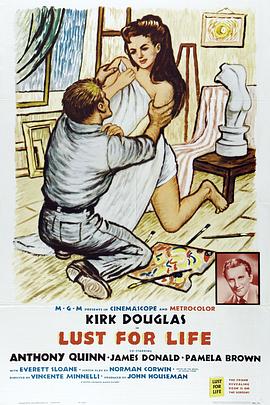
在立志成为画家之前,梵高(柯克·道格拉斯 Kirk Douglas 饰)曾经是画廊里颇有前途的售画员,经过几次情感失败之后,他开始尝试成为一名画家。梵高悲天悯人的性格让他能与贫穷矿工们和谐相处,用画笔描绘他们的悲惨生活。他的画奔放热情、情感肆意,但却得不到主流画坛的欣赏。梵高邀请当时正崛起的印象派画家高更(安东尼·奎恩 Anthony Quinn 饰)一同去法国南方作画。多年来,弟弟提奥一直在经济上支持梵高,甚至为他资助高更去南方的所有费用。刚开始两人其乐融融,一起创作了很多高水准的作品,但因两人的个性互不相容,逐渐产生激烈争吵。高更试图离开,梵高为此精神受打击,试图持刀威胁高更,高更仓皇而逃,梵高最终自残割下了自己的耳朵。孤独、贫困的梵高受精神病所折磨,几度进入病院疗养。而他始终没有停止绘画,一直在等待大众的赏识,最终精神崩毁,开枪结束了生命。
安...